Staffa's history and geology: how the columns formed and why the island is famous
Staffa is a slab of lava that cooled and cracked into columns about 60 million years ago, then was carved by the Atlantic into cliffs and 19 sea caves. A botanist's account in 1772 made it one of the sights of Europe, and it has belonged to the National Trust for Scotland since 1986.
By the Staffa Island guide team · Updated 24 Nov 2026 · Facts checked 24 Nov 2026 · Operator fares checked 24 Nov 2026
On this page
- Age of the rock
- About 61 million years (National Trust for Scotland); Staffa Trips says 59 million.1,2
- Name
- Norse for staff or pillar island.3
- Size
- About 33 ha; highest point about 42 m.4
- Uninhabited since
- 1800.5
How the columns formed
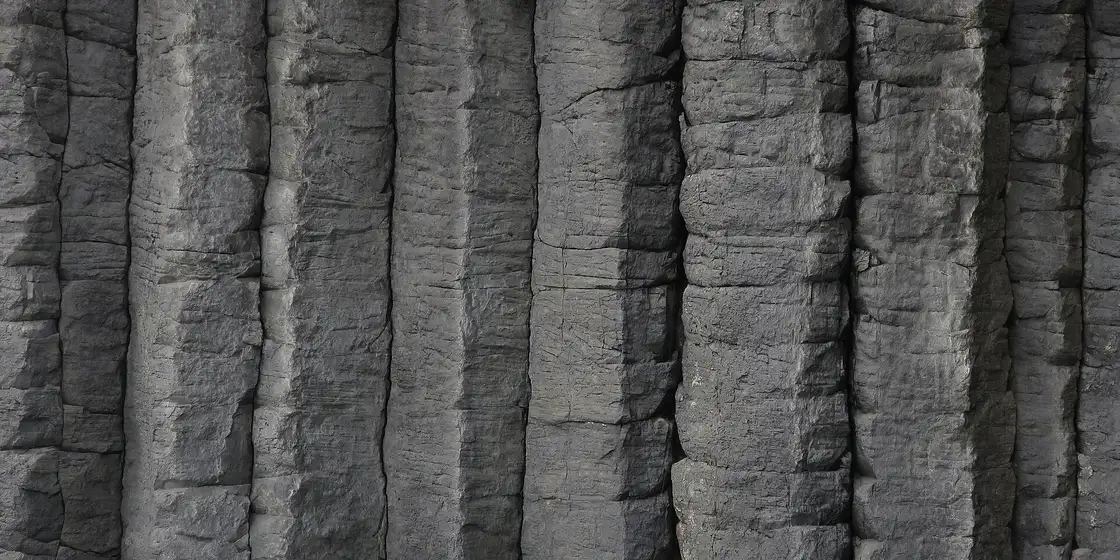
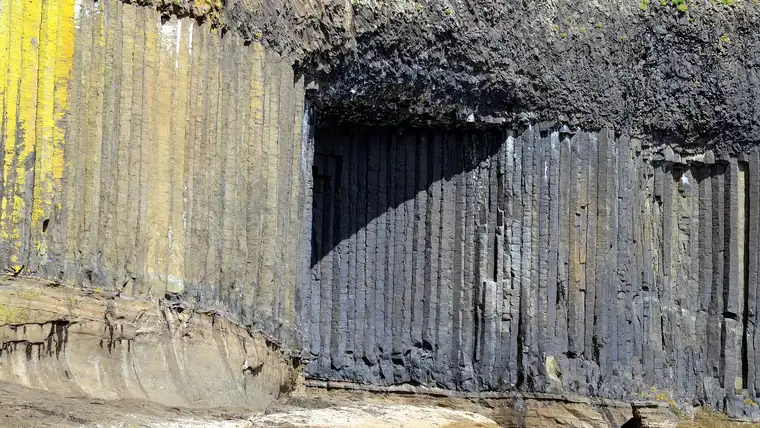
The National Trust for Scotland explains the columns this way: thick lava flows erupted across damp or wet ground, and after the lava had mostly solidified, the hot but solid rock shrank as it cooled and cracked into vertical columns 8. You can see the result all over the island: straight colonnades at the base of the cliffs, curved and tilted columns around the caves, and a cap of rougher rock above.
The Trust dates the rock to around 61 million years ago; Staffa Trips gives 59 million years 1,2. So “about 60 million years” is a fair round figure.
The Giant’s Causeway myth. Staffa and the Giant’s Causeway in Northern Ireland look like a matching pair, and legend joins them. The Trust says both formed around 61 million years ago but in different eruptions, at different times, and that they were never directly connected 1.
The caves. Fingal’s Cave is one of 19 sea caves around the island, formed as heavy ocean swells found the joints between the columns 9. All but one face south-east; the Clamshell Cave faces due east 10.
The name
Staffa is a Norse name: staff-ay, staff or pillar island, after the columns 3. Fingal’s Cave also has a Gaelic name, An Uamh Binn, the musical cave 11.
Famous visitors
In 1772 the botanist Joseph Banks described the island’s wild beauty, and it soon became a must-see stop 12. Felix Mendelssohn visited in 1829, and the cave is linked with his Hebrides Overture 11,13. The National Trust lists Queen Victoria, J M W Turner, Sir Walter Scott, William Wordsworth, Lord Tennyson, Jules Verne, Robert Louis Stevenson and John Keats among the visitors who followed 11,12.
Owners and protection
Staffa has been uninhabited since 1800 5. In 1986 it came into the care of the National Trust for Scotland, a gift from John Elliott Jr of New York in honour of his wife Elly’s birthday, and in 2001 it became a National Nature Reserve 6. It is also a Site of Special Scientific Interest inside the Loch na Keal National Scenic Area, and the sea around it is a Marine Protected Area and Special Area of Conservation 7. It still welcomes tens of thousands of visitors a year; no exact count is published 14.
Claims without good evidence
- That Fingal’s Cave appears in the Harry Potter films or books: no reliable source says so.
- That all livestock was removed from the island in 1997: stated by a local directory, but the National Trust for Scotland does not say so.
- Exact visitor numbers: only “tens of thousands” a year.
-
Staffa Trips from Iona or Fionnphort
Best overall · Iona or Fionnphort · About 3 hours · Staffa: lands when the swell allows
Lands at the Staffa jetty when the swell allows, aiming for at least an hour ashore.
Book with Staffa Trips£45 per adult, 2026operator's fare, checked 24 Nov 2026 -
Staffa Tours from Iona or Fionnphort
Best second choice from Iona and Fionnphort · Iona or Fionnphort · 2.5 to 3 hours · Staffa: lands when the swell allows
About an hour on Staffa when the landing is possible.
Book with Staffa Tours£47.50 per adult, 2026operator's fare, checked 24 Nov 2026
Questions people ask
How were Staffa's columns formed?
Thick lava flows spread over damp or wet ground. Once the lava had mostly solidified, the hot but solid rock shrank as it cooled and cracked into columns, most of them six-sided.
Is Staffa connected to the Giant's Causeway?
No. Both formed around 61 million years ago, but from different eruptions at different times, and they were never directly connected, according to the National Trust for Scotland.
Is Staffa inhabited?
No. Nobody has lived there since 1800. The island is in the care of the National Trust for Scotland.
Who owns Staffa?
The National Trust for Scotland, since 1986. The island was a gift from John Elliott Jr of New York, in honour of his wife's birthday.
Keep planning
-
 Fingal's CaveFingal's Cave on Staffa: how to reach it, walking inside on the causeway path, the railing and the drop, the best light, the Mendelssohn story and which boats land..
-
 On the islandHow to spend about an hour on Staffa: jetty to Fingal's Cave and the puffins, no toilets, dogs and drones rules, biosecurity, cliffs, and access for limited mobility..
-
 IonaCombine Staffa with Iona: the 10-minute ferry from Fionnphort (£2.40), Iona Abbey hours and 2026 prices, the one-way Staffa trick, the Three Isles tour and car permits..
- Boat tripsEvery Staffa boat trip ranked: Staffa Trips, Staffa Tours, Turus Mara, the Three Isles and Seafari, by port, 2026 fare, time ashore, Lunga and puffins..
Sources for this page
- National Trust for Scotland, Staffa highlights: “However, although both were formed around 61 million years ago, they were formed by different volcanic eruptions, at different times, and were never directly connected.”Staffa Trips gives 59 million years instead, so “about 60 million years” is a fair summary. Checked 24 Nov 2026.
- Staffa Trips: “Staffa was formed during a period of intense volcanic activity some 59 million years ago.”The National Trust for Scotland gives around 61 million years. Checked 24 Nov 2026.
- National Trust for Scotland, Staffa highlights: “The giant basalt columns which gave rise to the island’s Norse name Staffa – literally staff-ay or staff (pillar) island – are truly remarkable.” Checked 24 Nov 2026.
- Wikipedia: “It is 33 hectares (82 acres) in area and the highest point is 42 metres (138 feet) above sea level.” Checked 24 Nov 2026 · secondary source.
- Wikipedia: “Uninhabited since 1800” Checked 24 Nov 2026 · secondary source.
- National Trust for Scotland, Staffa: “Staffa came into the care of the National Trust for Scotland in 1986, a gift from John Elliott, Jr, of New York in honour of his wife Elly’s birthday. Staffa was designated a Na…” Checked 24 Nov 2026.
- National Trust for Scotland, news stories: “The island is a Site of Special Scientific Interest, sits within the Loch na Keal, Isle of Mull National Scenic Area, and the sea around Staffa is a Marine Protected Area and Sp…” Published 12 May 2026 · checked 24 Nov 2026.
- National Trust for Scotland, Staffa highlights: “The columns formed as a result of thick lava flows being erupted across damp or wet ground. The vertical columns were formed after the lava had mostly solidified, by the shrinka…” Checked 24 Nov 2026.
- National Trust for Scotland, Staffa highlights: “Fingal’s Cave is one of 19 sea caves around Staffa, formed as aeons of heavy ocean swells have found the crevices between the columns” Checked 24 Nov 2026.
- Staffa Tours: “Since all the caves face south-east (with the exception of Clamshell which faces due east) they are best seen by morning light.” Checked 24 Nov 2026.
- National Trust for Scotland, Staffa highlights: “Fingal’s Cave (or An Uamh Binn/Musical Cave) has enthralled and inspired travellers for hundreds of years. Famous visitors include Queen Victoria, J M W Turner, Sir Walter Scott…” Checked 24 Nov 2026.
- National Trust for Scotland, Staffa: “In 1772, the botanist Joseph Banks highlighted the wild, natural beauty of the island, and it soon became a must-see location. Famous visitors have included Queen Victoria, Lord…” Checked 24 Nov 2026.
- Staffa Tours: “culminating in a visit to the world famous Fingal’s Cave, as visited in 1829 by the world famous composer Felix Mendelssohn.” Checked 24 Nov 2026.
- National Trust for Scotland, news stories: “continue to welcome tens of thousands of visitors annually.”No exact annual count is published. Published 21 Nov 2025 · checked 24 Nov 2026.